Wednesday, August 30, 2006

Books for kids hit by Katrina

Democrats.org has a post called "CDF Katrina Project Needs Books" that's worth checking out...


The Children's Defense Fund (CDF) Freedom Schools Katrina Project partners with community based organizations, service agencies and universities in the Cleveland, Columbia and Jackson, MS areas to provide after-school programming each day public schools are in session for children in families affected by Hurricanes Katrina and Rita.


Dubya thinks that if we leave Iraq we will have "lost our soul as a nation" or some such thing. I think that, despite all the good work that has been done by private individuals and organizations, the mess on the Gulf Coast a year after Katrina shows that we already have.

Wednesday, August 23, 2006

Thank you, Judge Taylor

Judge Anna Diggs Taylor is the judge who struck down the NSA wiretapping program as unconstitutional. Dubya doesn't think she and those who applaud her ruling "understand the world we live in today." Judge Taylor is a 75-year-old black woman. I think she probably understands a lot about terror and intimidation, as well as having lived through the Depression, World War II and the Cold War. Find out more about her and thank her for her ruling here. This is what I wrote:

Thank you, Judge Taylor, for showing Congress the way. Too many people have allowed themselves to be intimidated because Karl Rove and his attack dogs in the right wing echo chamber might call them names or even make death threats against them, but that is not how this country got started and survived until today. Those things happened because people like you had the courage to stand up for their convictions. Even if, God forbid, your ruling is overturned or weakened on appeal, this administration's lawlessness is now on record, and history will vindicate you.

Saturday, August 19, 2006

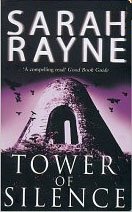
Book Review: Tower of Silence


Tower of Silence by Sarah Rayne *****

Mary Maskelyne, an infamous teenage murderess from the 1960s, now in her forties, is transferred to Moy, a remote Scottish institution for the criminally insane. Selina March, a colorless, proper spinster, short of money, converts her house to a B&B. Mystery writer Joanna Savile arrives in the village of Inchcape, near Moy, to do some research and specifically to interview Mary Maskelyne. The stage is now set for events that began with a shattering atrocity in the tumultuous India of the late 1940s to play out to their final conclusion.

Sarah Rayne is supposed to be a pseudonym for a writer who is already well-known in Britain for horror fiction. Remnants of this may be seen in some of the particularly gruesome events that take place in Tower of Silence, but they don't seem to be out of place or inserted just for shock value. I, for one, am glad that she decided to switch genres; her other novels may be well written but I probably would not have found them, and I would imagine that psychological suspense gives her much more scope for her talents. Her writing is superb and even poetic at times. Her characters, even the worst of them, are imagined from the inside, and are vividly drawn. The portrayal of Mary Maskelyne, manipulative, narcissistic and attention-seeking, is one of the most chilling fictional examinations of the sociopathic mind that I have ever encountered. Other, more sympathetic characters include Emily Frost, the colorful and many-faceted daughter of one of the doctors at Moy, who volunteers to work with some of the patients; the sad, traumatized and extremely dangerous patient known as Pippa; and the attractive, strangely charismatic Joanna.

Unfortunately, for the most part Rayne does not seem to portray male characters nearly as vividly or sympathetically, although I did like Joanna's husband, the half-Hungarian Krzystof Kent. Also, she may push coincidence a bit too far for some in bringing all of these people together in the same place, but if you're like me you will be too caught up in the plot and the characters' lives to care.

Friday, August 18, 2006

Book Review: Labyrinth

Labyrinth by Kate Mosse ***-1/2

Labyrinth focuses mainly on two women, Alice in the present, who finds a mysterious cave while volunteering on an archaeological dig, and her ancestress Alais in the era of the Albigensian Crusade. The link between the two is a set of three books called the Labyrinth Trilogy, which supposedly leads to the Holy Grail. I found this the weakest point in the book – it feels like the whole Holy Grail connection was thrown in to capitalize on the success of The Da Vinci Code, as was the pursuit of the heroine across southern France by (at least self-appointed) agents of the Catholic Church. I never did get quite clear on who exactly was behind the villains or if they were mainly working for themselves.

I found the medieval sections of the book to be the strongest, both in character and in plot; the modern characters seemed to be pale echoes of their prototypes. It’s too bad that the author (or her editors) seemed to be a bit too concerned with jumping on Dan Brown’s bandwagon, because I think that Mosse could have written a much better book if she had made it a straight historical novel about the persecution of the Cathars, an event which, at least as far as I know, has yet to be thoroughly explored in fiction. She would, however, need to delve a bit more into their beliefs; as it was, apart for a couple of throwaway lines about their dualistic theology, they were portrayed pretty one-dimensionally as proto-Protestants of a sort, all of whom seem to have been perfect, in more sense than one. (The Perfect was the name for the more advanced “grade” of Cathars.)

I am not generally a fan of books that switch back and forth between the past and present, but at least, thank God, Mosse did not use the "time travel" gimmick, which has been done to death, except in a very oblique way. I did find the use of untranslated French and Occitan words to be distracting. Surprisingly (since I am an English major), I didn't notice the sentence fragments that annoyed another Amazon reviewer, but one thing that did jump out at me was the figurative language, some of which seemed to be a bit forced, as if the author had written these “great” similes in creative writing class and felt like she just had to use them somewhere. However, all in all I did find this book to be a worthwhile and enjoyable read.

Tuesday, August 15, 2006

Missionaries, my dear!

Missionaries, my dear! Don't you realize that missionaries are the divinely provided food for destitute and underfed cannibals? Whenever they are on the brink of starvation, Heaven in its infinite mercy sends them a nice plump missionary.
—Oscar Wilde
A couple of them showed up at my door today, and not being desitute, underfed or a cannibal, I sent them away uneaten. They asked (or rather the one who was in charge did) if I read my Bible and I said "Yes." (Thought bubble: But not the same one you read.) So of course he started telling me about how the end was near and all these wonderful things were going to happen – nothing about the bloodbaths in the streets and all the Jews and other "infidels" who don't convert being killed and thrown into the lake of fire, of course. Then he whipped out a little book and asked if I would read it if he left it with me. I said, "Probably not," so he left me one of the cut-rate tracts – he did compliment me on at least being honest.

It's kind of ironic (and very apropos) that I was looking at an article on Darwin in an old issue of the Skeptical Inquirer earlier and found a quote that expresses my sentiments perfectly – if I'd been feeling feisty I might have tried it out on this guy. As the article points out, "Darwin was not, by anyone's standards, a believing Christian," although he "consistently denied the charge" of being an atheist – and why shouldn't he have been telling the truth, since his problem seems to have been more with Christian doctrine than with God? Anyway, here is the quote, and this has always been my sticking point as well:
"... I can indeed hardly see how anyone ought to wish Christianity to be true; for if so, the plain language of the text seems to show that the men who do not believe, and this would include my Father, Brother and almost all my best friends, will be everlastingly punished. And this is a damnable doctrine." (Barlow 1958)
I know that there are people who get around this whole idea somehow, but I can't, and a lot of others have no problem with it, but just accept that the vast majority of people who have ever lived, no matter how good a life they have led, are going to be thrown into eternal torment by a "loving, merciful" God for not believing the right thing.

"The nexus of politics and terror"

An excellent clip from 2005 - Keith Olbermann examines the curious way in which, whenever the Republicans have a spate of bad news, or the Democrats get some positive press, lo and behold, someone from the government comes out and says, "Be afraid. Be very afraid. The terrorists are going to get you!"


Note (Tuesday, 12:30 p.m.): The YouTube site appears to be doing some maintenance at the moment, so if the link is blank, please check back later. Thanks.

Saturday, August 12, 2006

The threat level is up - it must be election season

Maybe I’m crazy, but I thought I read somewhere that they were going to ditch the color-coding thing because it was basically useless – didn’t give anyone a clue as to what they were supposed to do or not do – although it does, as Greg Palast points out on Buzzflash today (8/15), let the terrorists know when our guard is down. Well, there is one thing that orange or red means we’re supposed to do – vote Republican.

Wednesday, August 09, 2006

The Nagasaki principle

I am excerpting this column liberally (and I hope not doing any violence to the context) but the whole article (please click on title) should really be read. Although to my abiding (but not everlasting, I hope) regret, I have yet to finish one of James Carroll’s book (among them Constantine's Sword and Crusade) but I think that he is one of the most powerful writers on the scene today, as well as the only one I know of who truly writes with a prophetic spirit. (I am referring here to the prophets of the Hebrew Bible, whose function was not so much to predict the future as to denounce the sins of the nation and call it back to the right path.)
The Nagasaki principle By James Carroll | August 7, 2006 Today is the anniversary of what did not happen. Sixty-one years ago yesterday, the atomic bomb was dropped on Hiroshima. The scale of nuclear devastation was apparent at once. The next day, no decision was made to call off the bombing of Nagasaki. Why? Historians debate the justification of the Hiroshima attack, but there is consensus that Nagasaki, coming less than three days later, was tragically unnecessary. President Harry Truman's one order to use the atomic bomb, given on July 25, established a momentum that was not stopped. ....... It is commonly said that war operates by the law of unintended consequences, but another, less-noted law operates as well. War creates momentum that barrels through normally restraining barriers of moral and practical choice. Decision makers begin wars, whether aggressively or defensively, in contexts that are well understood, and with purposes that seem proportionate and able to be accomplished. When destruction and hurt follow the outbreak of violence, however, and then when that destruction and hurt become extreme, the context within which war is begun changes radically. First assumptions no longer apply, and original purposes can become impossible. When that happens, what began as destruction for a goal becomes destruction for its own sake. War generates its own force in which everyone loses. This might be called the Nagasaki principle. The Nagasaki principle comes in two parts. It can operate at the level of close combat, driving fighters to commit atrocities that, in normal conditions, they would abhor. It operates equally at the level of the commanders, leading them to order strikes out of desperation, frustration, or merely for the sake of ``doing something." Such strikes draw equivalent responses from the other side until the destruction is complete. After the fact, massive carnage can seem to have been an act for which no one is responsible, like the result of a natural disaster. That's when a second aspect of the Nagasaki principle comes into play -- the refusal to undertake a moral reckoning with what has been done. ........ This may seem like airy theorizing, but the psychologically unfinished business of the Nuclear Age, dating to the day after Hiroshima, defined the American response to the trauma of Sept. 11, 2001. The nation had lived for two generations with the subliminal but powerfully felt dread of a coming nuclear war. Unconsciously ashamed of our own action in using the bomb, we were waiting for pay-back, and on that beautiful morning it seemed to come. The smoke rising up from the twin towers hit us like a mushroom cloud, and we instantly dubbed the ruined site as Ground Zero, when, as historian John Dower observes, the only true Ground Zeros are the two in Japan. Our unconscious shame was superseded by an overt sense of victimhood. We launched a war whose momentum has carried the world into the unwilled and unforeseen catastrophe that unfolds today. Our denial of nuclear responsibility, meanwhile, embodied in our permanent nuclear arsenal, licenses other nations that aim to match us -- notably Iran. Momentum and denial combined to destroy Nagasaki, which was, alas, not the end, but the beginning. James Carroll's column appears regularly in the Globe. © Copyright 2006 The New York Times Company

Tuesday, August 08, 2006

Those lazy crazy hazy days of summer...

Or however it goes. It certainly has been hazy – up in the 90’s last week, which probably is no excuse for my being lazy. And here I’d meant to try to put something up here every day, since going for days on end with nothing new is no way to get regular visitors – not something I need to worry about too much right now.

Anyway, things seem to be, if not going from bad to worse, at the very least staying very very bad over in Israel, Lebanon and Iraq. Condi (and yes, Secretary Rice would be more respectful but her boss leads the way) is energetically exerting herself, making the rounds of the Sunday morning talk shows and issuing demands to Iraq, Syria and Hezbollah via interview and press conference. As people are continually pointing out, diplomacy means talking to the people you disagree with, not just the ones who hang on your every word.

Rummy is starting (starting?) to sound like a parody of himself with his “my goodness!” and rhetorical questions in front of the committee last week – sorry, I forget which one but I know Hillary slapped him down good. “Am I a delusional old coot who should be doing nothing more demanding than sitting out on the porch playing checkers, Senator Clinton? Heavens to betsy, I don’t think so.”

I’ve finished a couple of good books (The Thief by Megan Whalen Turner and The Templar Legacy by Steve Berry), and although I’m not sure whether I’ll review them I definitely have a rant waiting to be spewed about the people who go around whining that the authors of “religious thrillers” like The Da Vinci Code and The Templar Legacy are being mean to Christianity, hate it, “have an ax to grind,” etc.

Finally, today is Judgment Day for Joe Lieberman in Connecticut. I’m sorry, I liked Joe in the 2000 race although I did think he was a bit too collegial with Dick Cheney in their “debate,” but I have to hope now that he loses. As I’m reading all over in the blogs and in other articles on the Internet, and as his own constituents were calling in to On Point last week to say, he’s out of touch with them, he’s enabling and providing cover for the disastrous policies of this administration, and he’s acting as if he’s somehow entitled to his seat in the Senate and it’s the height of presumption for anyone to mount a serious challenge. I found it interesting that as far as I could tell, not a single “real” person called in to On Point to express their support of him, and I know from listening to them in the past that they always try to get people expressing different points of view. He may still pull it off, and I hope that if he does he comes down off his high horse and considers what brought him to the point of almost losing a primary that he should have walked away with, but I don’t have much hope.

Tuesday, August 01, 2006

A different take on Qana

From Naomi Ragen, an author living in Jerusalem (sent on Sunday night so more information may be available):
Friends,

1. Tonight, an IDF spokesman showed aerial photos of rockets being fired from residential areas in Qana. It showed the portable rocket launchers being parked beneath residential buildings. The spokesman said that the bombs dropped on Qana were dropped at 1 a.m. The reports of the building collapse took place at 7 a.m. Also, no bombs actually hit the building. So, who was responsible for the collapse of that building? Could Hezbollah weapons have exploded, destroying the building? Was it deliberate, a way to pressure Israel into a ceasefire the same way they did last time, in exactly the same spot? And why is no one in the media picking up on this time gap and asking questions?

2. The number of those injured is being supplied by Lebanese sources, and being quoted by all the news stations. So far, only 26 bodies have been recovered. But news reports are saying the number was twice that, and half are children. That too is supplied by unknown sources and repeated by the major media.

3. At 7 a.m. a barrage of Hezbollah rockets hit the shopping center and buildings of Kiryat Shmona, unlike anything else the town has experienced. Altogether 1500 kilograms of bombs have hit the area's approximately 25,000 residents remaining in their homes. Where is the outrage over that?
---------------------------------------------------------------------------

For more articles,please visit my Web page at: http://www.NaomiRagen.com

Friday, July 28, 2006

The Middle East

Considering that the "About me" section of this blog says that I want to share some of my "passions," some may wonder why I've generally been silent about the attacks being made back and forth across the Israel-Lebanon border by Israel and Hezbollah for the past two weeks. I suppose that my feelings about the whole situation could be described as "passionately conflicted."

One reason is that I feel decidedly inadequate in talking about the situation. My knowledge is nowhere near deep enough to enable me to make my way through the morass of interpretations, propaganda, "spin," exaggerations and outright lies. Although I believe fervently in Israel's right to defend itself (and it's sad that even a supporter of Israel has to innoculate herself against the inevitable demonization by the right), I am deeply troubled by its methods of doing so, and have to wonder if the long-term consequences are worth the short-term gains. The bombing of the U.N. post on Tuesday was especially disturbing, although I can't believe that something of this sort would be done deliberately by any sane government.

In trying to come to some understanding of what is going on over there, I found this article to be particularly useful.

Criminalizing Jesus

41"Then he will say to those on his left, 'Depart from me, you who are cursed, into the eternal fire prepared for the devil and his angels. 42 For I was hungry and you gave me nothing to eat, I was thirsty and you gave me nothing to drink, 43 I was a stranger and you did not invite me in, I needed clothes and you did not clothe me, I was sick and in prison and you did not look after me.' 44"They also will answer, 'Lord, when did we see you hungry or thirsty or a stranger or needing clothes or sick or in prison, and did not help you?' 45"He will reply, 'I tell you the truth, whatever you did not do for one of the least of these, you did not do for me.'
Matthew 25:41-45
Where are all the good Christians now? Loaves and fishes, anyone? There is also a well-attested tradition in Judaism that the sin for which Sodom and Gomorrah was destroyed was not so-called “sodomy” but the fact that they outlawed giving any asistance to strangers, who were in much the same position as the homeless today – dependent upon the kindness of those in the host city. Shame, shame, Orlando and Las Vegas! I assume that people are still allowed to feed the pigeons, who, like blastocysts, have more rights than fully functioning human beings. Click on title for full story.
Another U.S. City Outlaws Feeding Homeless People Even Mayor Supports Homeless Feeding Ban ORLANDO, Fla. -- Another American city has made it a crime to feed the homeless in certain areas. Last week, Las Vegas outlawed feeding homeless people at city parks. Now, Orlando is following suit. Orlando is trying to keep charitable groups from feeding the homeless in downtown parks. Officials said transients gathering for weekly meals create safety and sanitary problems for businesses. The City Council voted to prohibit serving meals to groups of 25 or more people in parks and other public property within two miles of City Hall without a special permit. A group called Food Not Bombs, which has served weekly vegetarian meals for the homeless for more than a year, said it will continue illegally. The American Civil Liberties Union vows to sue, saying it's a superficial fix that ignores the city's homeless problem. Two of the city's five commissioners voted against the ordinance, including Commissioners Robert Stuart, who runs the homeless shelter Christian Service Center, and Sam Ings, a retired police officer. Stuart told The Orlando Sentinel that Orlando is taking a step to "criminalize good-hearted people" who he says are trying to help. He went on to tell the paper that group feedings in the parks had not become unwieldy to the city, as some had claimed. He said the ordinance says, "Orlando doesn't care," the Sentinel reported.

Tuesday, July 25, 2006

Arlen, Arlen, Arlen...

You have done this to us so many times before – you get our hopes up that Congress is finally going to stand up for itself, if for nobody else. Then in a couple of days you’ll announce that you have a “compromise” that allows the puppet king and his evil vizier to go on doing just what they’ve been doing all along. However, Arlen, you tease, I still can’t help hoping that this time you’ll stick to your guns and prove me wrong.

Click on title for full story.
Specter prepping bill to sue Bush
By LAURIE KELLMAN, Associated Press Writer

WASHINGTON - A powerful Republican committee chairman who has led the fight against President Bush's signing statements said Monday he would have a bill ready by the end of the week allowing Congress to sue him in federal court.

"We will submit legislation to the United States Senate which will...authorize the Congress to undertake judicial review of those signing statements with the view to having the president's acts declared unconstitutional," Judiciary Committee Chairman Arlen Specter, R-Pa., said on the Senate floor.

Wednesday, July 19, 2006

I couldn't have said it better myself

Please click on title for full story.
July 18, 2006, 9:39PM
Please keep your religion away from my stem cells

By CRAGG HINES
Copyright 2006 Houston Chronicle

Vainly would you have waited in the Senate's stem cell debate for one of the more enlightened members to rise and state the obvious: "This is an outrage."

No, none of that. It was all too exquisitely polite, as is often the case in that intensely self-regarding body.

So no member dared to note the absurdity of the national legislature actually having to take time, in the 21st century, to discuss such a scientific — and, if you insist, moral — no-brainer.

You can find another, more closely reasoned article, which points out the glaring inconsistency of denouncing research (and any destruction of blastocysts) as murder while blithely allowing "murder" to take place all over the country (as long as it's not federally-funded) here.

Monday, July 17, 2006

Blessed are the peacemakers, for they shall be called children of God

Bill Clinton qualifies. Jimmy Carter qualifies, although I don’t always agree with some of his more recent stances. Dubya’s response (video here) to a serious question about the turmoil in the Middle East: “I thought you were going to ask me about the pig [the boar that was being roasted for dinner].” Don’t they have pig roasts in Texas? You’d think this was the first one he’d ever been to

I hate to tell you, Dubya, but saying that maybe they should stop does not qualify you as a peacemaker.

I suppose it could have been worse - he could have invited the Arabs and Israelis to talk about their differences while eating some of "the pig" (shudder) On the other hand, that might have brought them together as they were both mortally offended by his cultural insensitivity.

Saturday, July 15, 2006

Book Review: Misquoting Jesus


Misquoting Jesus by Bart Ehrman ****

In his introduction to Misquoting Jesus, Bart Ehrman gives a brief account of his own personal journey from unquestioning acceptance of the New Testament text to his present view of it as a “very human book.” He then proceeds to show the reader exactly why we cannot know in many cases what the original text was, the ways in which texts are changed, accidentally or intentionally, and gives several examples of verses whose “original” content is disputed.

While I suppose that the history of the development of textual criticism and the discovery and comparison of various manuscripts over the past several centuries is necessary to the overall thrust of the book, this was the part that I found least interesting although the sheer number of discrepancies (many relatively minor) is eye-opening. However, I believe that two sections of the book are particularly helpful to the general reader in understanding why the differences exist. Chapters 1 and 2 deal with the formation of the Christian canon as well as the mechanics of scribal transmission and that of the New Testament in particular. Ehrman stresses the fact that many of those who were copying the earliest texts of these books were not trained scribes and in many cases may have been barely literate – something that the average person probably doesn't even consider in our modern world of widespread literacy, photocopying and "cut and paste." Chapters 6 and 7, on the other hand, look at the motivations for intentional changes, which were often pure; that is, in many cases the scribe may have believed that he was correcting an earlier mistake or clarifying a text that might otherwise be used to support “heretical” beliefs.

Many readers, I suspect, will be upset to discover that there is a consensus among textual critics that one of the most famous stories in the Gospels, that of the woman taken in adultery, is not original to the Gospel of John. However, as Ehrman points out, that does not mean that it is not a real tradition; like many parts of the Bible that seem out of place, it may have been so well-known and powerful that it had to find its way into the text somehow.

It has always struck me that the belief in the inerrancy of the Bible (or anything made or transmitted by human hands) comes dangerously close to the sin of idolatry. I hope that this introduction to textual criticism, which is carried out by many scholars because of their love of the text and a desire to get as close to the original as possible, will inspire many with a new respect for the many people who did create it and transmit it. God does work through human beings, after all.

Friday, July 14, 2006

Joe Wilson and Valerie Plame Wilson, patriots

If this administration (and its allies in the echo chamber) are as concerned about leaks of classified information as it claims to be, why is Karl Rove still working in the White House, and where are the calls to prosecute Novak under the Espionage Act (not something I support, by the way, since I try to be consistent)? Click on title for full story:

Former CIA officer: Cheney, Rove engaged in 'whispering campaign'
Plame alleges Bush administration officials ruined her career

Friday, July 14, 2006; Posted: 11:01 a.m. EDT (15:01 GMT)

WASHINGTON (AP) -- Former CIA officer Valerie Plame and her husband, former Ambassador Joseph Wilson, said Friday they decided to sue Vice President Dick Cheney and presidential adviser Karl Rove because they engaged in a "whispering campaign" to destroy her career.

Plame told a news conference that "I and my former colleagues trusted the government to protect us in our jobs" and said it "betrayed that trust. I'd much rather be continuing my career as a public servant than as a plaintiff in a lawsuit."
To donate towards what will probably be astronomical legal costs in the Wilsons’ pursuit of justice, click here.

Thursday, July 13, 2006

Comments on the "You have no civil rights if you're dead" school of thought

These people are such wimps. As one member of Congress said when another used that despicable line on the floor, “Give me liberty or give me death!”

It’s a little late but still close enough to the Fourth of July to remember the Revolution and Declaration of Independence. Let’s listen in on some of our friends on the right as they react in real time:

Dick Cheney: Whoa, Tom – guys! What’s all this about pledging our fortunes? You mean we might lose money on this deal? I wouldn’t have to give up my slaves, would I? (Aside) Maybe the British would give Halliburton some no-bid contracts...if their troops die from the contaminated food and water and these moonbats win, I could claim that I was really working for them all along.

George Dubya: Wait a minute - pledging our fortunes is bad enough. You’re also talkin’ about our lives here! Dad! Is there a nice, safe National Guard unit you can get me into?

Bill O’Reilly: Just remember, if you’re dead you have no inalienable rights, or freedom. And what's all this "endowed by our Creator" stuff? If you mean God, say "God." Are you guys part of the "War Against Christmas" or something?

Bob Novak: (writing) Thomas Jefferson, John Hancock - hey, John, thanks for writing your name so big...

And the Pope thought that he was the only one who was infallible!

Of course, he also probably thought that he was the only one who talked to God.

Justice Department Lawyer To Congress: ‘The President Is Always Right’

The Senate Judiciary Committee yesterday heard testimony from Steven Bradbury, head of the Justice Department’s office of legal counsel. When questioned by Sen. Patrick Leahy (D-VT) on whether the President’s interpretation of the Hamdan case was right or wrong, Bradbury replied, “The President is always right.” Watch it:

Full transcript below:

LEAHY: The president has said very specifically, and he’s said it to our European allies, he’s waiting for the Supreme Court decision to tell him whether or not he was supposed to close Guantanamo or not. After, he said it upheld his position on Guantanamo, and in fact it said neither. Where did he get that impression? The President’s not a lawyer, you are, the Justice Department advised him. Did you give him such a cockamamie idea or what?

BRADBURY: Well, I try not to give anybody cockamamie ideas.

LEAHY: Well, where’d he get the idea?

BRADBURY: The Hamdan decision, senator, does implicitly recognize we’re in a war, that the President’s war powers were triggered by the attacks on the country, and that law of war paradigm applies. That’s what the whole case —

LEAHY: I don’t think the President was talking about the nuances of the law of war paradigm, he was saying this was going to tell him that he could keep Guantanamo open or not, after it said he could.

BRADBURY: Well, it’s not —

LEAHY: Was the President right or was he wrong?

BRABURY: It’s under the law of war –

LEAHY: Was the President right or was he wrong?

BRADBURY: The President is always right.

Note: Funny – I don't remember anyone, including myself, ever applying that standard to Bill Clinton! This is a CULT, the focus of which is a the most pathetic specimen of humanity the worshippers could find.

Tuesday, July 11, 2006

Book Review: The Amber Spyglass

The Amber Spyglass by Philip Pullman*****

At the end of The Subtle Knife, Lyra was kidnapped by Mrs. Coulter, who we find at the beginning of The Amber Spyglass has turned against the Church and fled to a remote mountain village where she is keeping her daughter in a drugged sleep in order to “protect” her. Will, accompanied by the angels Baruch and Balthamos, insists on rescuing Lyra before he will take the subtle knife to Lord Asriel. After a harrowing escape from Mrs. Coulter and now accompanied by Lord Asriel’s tiny Gallevespian agents, the two determine to travel to the land of the dead to find Will’s father and Lyra’s friend Roger, which will test their courage and strength of will more than anything they have been through so far. Meanwhile, Mary Malone, the physicist and ex-nun who helped them in the previous book, finds herself in another alternate world, where evolution itself has taken a different turn and a conscious species called mulefa has developed.

In the course of the book we will go with Lyra and Will to the world of the dead, at the entrance of which she will be forced to make the great betrayal foretold by the witches and others; witness the final battle between the forces of Lord Asriel and those of the Authority as well as Lyra’s parents’ final grand gesture on her behalf; and end up in a quiet field in the world of the mulefa as Lyra and Will make a momentous discovery that sets the history of Dust (and consciousness) on the right path again.

The Amber Spyglass contains many mature and disturbing themes that parents might want to discuss with their children, such as the nature of death, whether the Authority is really God Himself or only some people’s warped, twisted idea of God, and the fact that sometimes we must give up what matters most to us in order to live a full life. Pullman doesn’t pull any punches or shoehorn his story into a conventional “happy ending,” and of course it’s hard to imagine any of the greatest romances becoming an everyday life together with screaming kids and arguments about the car. The main ideas that this series communicates to me are: 1) True stories are “nourishing,” as No-name the harpy puts it, “truth” meaning much more fact; 2) Keeping promises and keeping faith with individuals is more important than “saving the world” – in fact, that may be what saves the world. 3) We must live in the here and now, whether or not we believe, as Pullman does, that there isn’t anywhere else. (In Judaism we are told that we will have to account to God after our deaths for the things we didn’t enjoy during our lives.)

A major theme of this particular book seems to be cooperation, as time and time again people who start a relationship in mutual distrust come to respect each other and work together for a common good. The society of the mulefa has been accused by some of being like a hippie commune. However, in addition to being a different species which may not have some of the violent impulses that seem to be part of human nature, it could be argued that because they only have one prehensile appendage, a trunk, instead of two hands, the fact that they need to cooperate in order to do many of the things that we can do alone may have caused nature to select for tolerance and the ability to get along.

I feel that this entire series would be perfect for teenagers who are wrestling with their own doubts about the role of religion in their lives, although it should be pointed out to them that Pullman’s almost uniformly negative Church is a fictional one and that most of the best qualities that his characters possess are also valued by most or all religions in their truest forms. I also feel that this book, in particular, can only really be appreciated after at least one rereading, as it is much deeper and more philosophical (to quote another Amazon reviewer) than the first two.